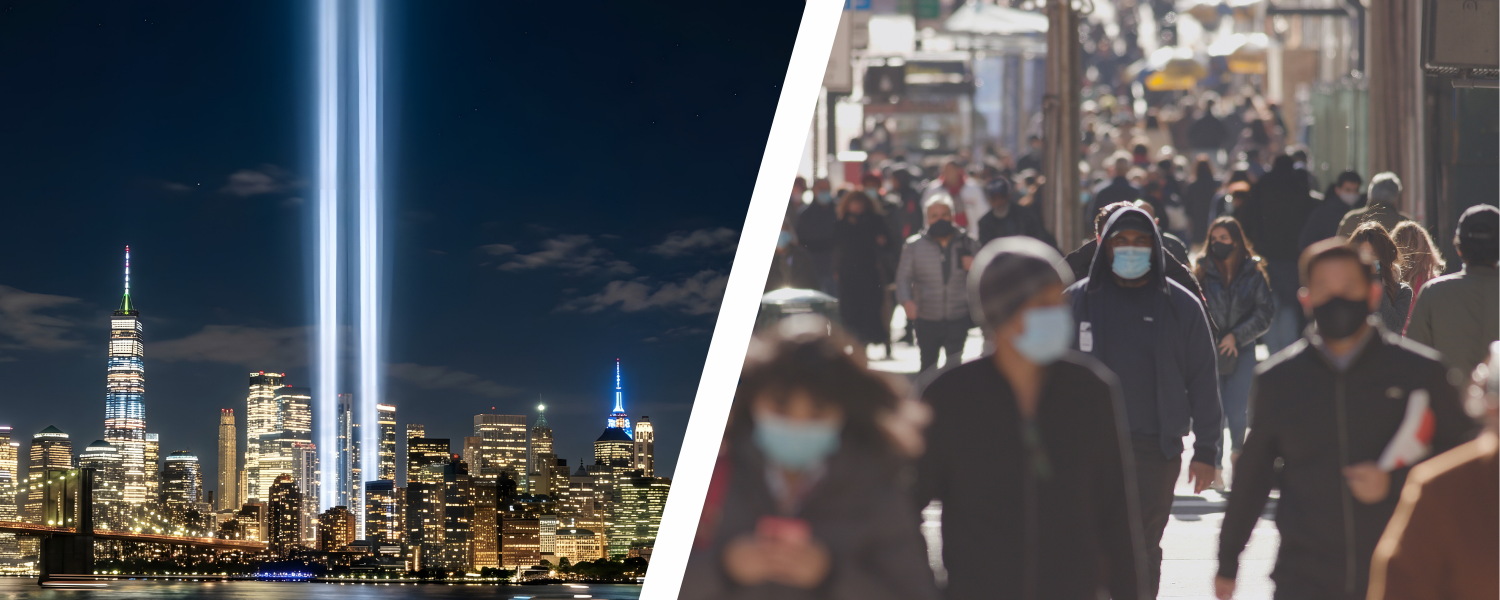

Twenty-five years ago, the Sept. 11 terrorist attacks changed travel almost overnight.
Airports closed. Trips were canceled. Travelers reconsidered when, where, and whether they wanted to go. And when commercial aviation resumed, the experience looked different. Security became more visible, procedures became more extensive, and travelers and the businesses serving them had to adjust to a new reality.
Nearly two decades later, the travel industry faced another historic disruption. This time, the threat wasn’t terrorism. It was a global pandemic that brought travel to a near standstill and introduced an entirely different set of challenges.
The circumstances surrounding Sept. 11 and COVID-19 were vastly different, as were their human tolls and the challenges they presented. But for travel professionals, both periods raised a familiar question: How does an industry built on moving people forward respond when the rules suddenly change?
For NTA members who worked through both eras, the answer may lie in something the travel industry has demonstrated time and again: adaptability and resilience.
“Both 9/11 and COVID brought travel to an abrupt halt and forced the industry to adapt,” said Chase Poffenberger of Academic Travel Abroad, who served as NTA chair in 2021.
“But while 9/11 changed how we travel through new security realities, COVID changed why we travel. The remarkable post-pandemic rebound revealed a deep human desire for connection, discovery, and meaningful experiences,” she said.
When security became part of the journey
It can be difficult to remember just how different flying was before Sept. 11, 2001.
Airport security existed, but the process was considerably different from what travelers experience today. In the aftermath of the attacks, the U.S. federal government created the Transportation Security Administration, screening requirements increased, cockpit doors were reinforced, and access to airport gates became more restricted. Over time, additional security measures became part of the flying experience.
For professionals in the travel and hospitality industry, those changes meant more than learning a new set of airport rules. They also meant helping travelers navigate uncertainty.
Suddenly, preparing a group for a trip included preparing them for a travel experience that had fundamentally changed.
Jim Warren, currently director of business development for Anderson Vacations, was working for an international inbound tour company in Vancouver when the attacks occurred. The effect on the company was devastating.
“Over 90% of our groups booked for the fall and winter season cancelled. We were unable to convince them to travel,” Warren said. “Unfortunately, the lack of incoming revenue combined with the extra expenses incurred in returning clients to Europe post-9/11 forced the company to cease operations.”
For some businesses, adapting wasn’t simply a matter of changing procedures. The disruption threatened their ability to continue operating at all.
What initially felt unfamiliar eventually became routine. Travelers learned to build more time into airport arrivals. Tour planners adjusted schedules. New security procedures became another part of preparing clients for a trip.
That transition raises an important question 25 years later: When does a response to a crisis stop feeling like a response and simply become part of travel?
A different kind of disruption
COVID-19 tested the industry in an entirely different way.
Instead of primarily changing how travelers moved through airports and other transportation systems, the pandemic challenged whether trips could operate at all. Regulations and restrictions shifted, businesses closed and reopened, staffing became an issue throughout the industry, and travelers faced uncertainty over whether plans made months earlier would still be possible when departure day arrived.
For group travel professionals, flexibility took on new importance.
Cancellation and refund policies, contingency planning, communications, insurance, supplier relationships, and technology all came under a new level of scrutiny as companies worked to serve travelers in an environment that could change rapidly.
Suppliers and destinations experienced the disruption from another side. Hotels, attractions, restaurants, transportation providers, and DMOs had to communicate changing conditions and evolving policies and regulations to partners and visitors while adapting their own operations.
“COVID forced us to become much more creative and intentional about how we connected with customers and partners,” said Amanda Thibeau, director of global sales for Aimbridge Hospitality.
“Like many organizations, we embraced virtual meetings, online sales calls, webinars. As travel recovered, some of those changes naturally faded. Virtual trade shows and fully online networking events never replaced the value of face-to-face relationship building in our industry. The return of in-person conferences and sales missions proved just how important personal connections remain,” she said.
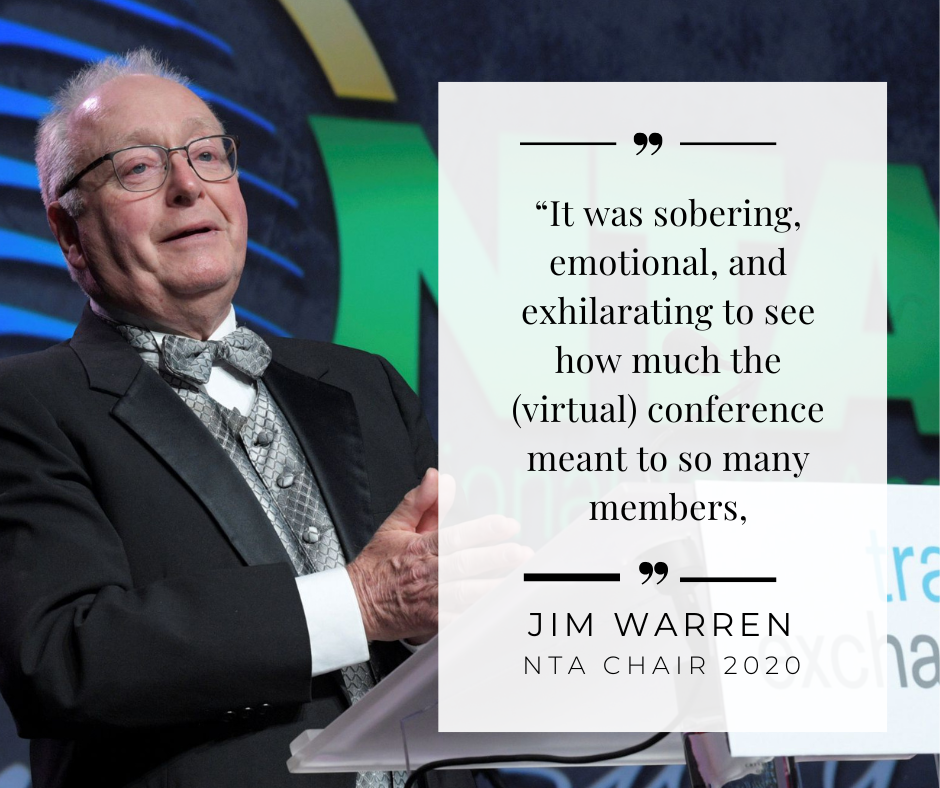
For Warren, who went on to serve as NTA chair in 2020, the response of people throughout the NTA community became one of the defining memories of that period.
“The resilience, creativity, selflessness, and compassion shared by members was remarkable,” Warren said.
The question isn’t whether every pandemic-era practice became permanent. Many didn’t. Rather, it’s whether the experience left travel businesses more prepared to change course when circumstances demand it.
From temporary solution to standard practice
There’s a striking similarity between the aftermaths of 9/11 and COVID-19: Practices that once seemed extraordinary can quickly begin to feel ordinary.
After 9/11, the airport experience was transformed by new layers of security. Many of those changes became so ingrained that travelers who came of age afterward have never known another way of flying.
COVID-19 accelerated a different kind of adaptation. Digital tools, touchless interactions, rapid communication, and new approaches to managing uncertainty became increasingly important as businesses looked for ways to keep travelers informed and operations moving.
But how much of that transformation really lasted?
Thibeau’s experience illustrates why there isn’t one industrywide answer. Virtual meetings and online sales calls provided critical ways to maintain relationships during the pandemic, but virtual trade shows never replaced the face-to-face interactions at the heart of the travel industry.
Other businesses retained technologies, operational efficiencies, communications practices, and processes developed during the pandemic.
A tour operator, hotel, destination, technology company, or attraction may have taken entirely different lessons from the experience.
That’s exactly why the industry’s experience can’t be summed up by a single “new normal.”
Rethinking risk
Both crises also changed the industry’s relationship with risk.
After Sept. 11, security was at the center of the conversation. During COVID-19, health, cancellations, business interruption, and rapidly changing travel requirements brought other forms of risk to the forefront.
For travel businesses, that has meant thinking not only about what might go wrong, but also about how quickly an organization can respond when it does.
“After 9/11, the travel industry began to see risk differently,” said Sal DiStefano, assistant vice president of Claims at the Aon Affinity Travel Practice. “It wasn’t just about accidents or weather anymore; there was a much stronger focus on intentional, high-impact events like terrorism and how quickly they can change travel patterns, regulations, and costs.”
That shift also changed the way businesses approached preparedness.
“That led companies to take security and crisis planning more seriously, understanding where travelers are, how to reach them, and how to move or support them if something goes wrong,” DiStefano said.
That shift from reacting to preparing may be one of the most important connections between the two eras.
Neither crisis allowed the industry to predict exactly what would happen next. Both required businesses to make decisions with incomplete information, communicate with concerned customers, and rely on relationships throughout the travel community.
What did we actually keep?
Twenty-five years after Sept. 11 and more than six years after the beginning of the COVID-19 pandemic, there has been enough distance to ask which changes really endured.
Some are obvious. The security infrastructure developed after 9/11 reshaped American aviation and remains part of traveling today, even as individual procedures continue to evolve.
The legacy of COVID-19 may be less visible.
Digital tools remain part of the industry’s toolbox, but they haven’t eliminated the value of face-to-face interaction. Businesses developed new ways to communicate quickly with customers and partners. Conversations surrounding cancellations, insurance, contingency planning, and flexibility took on new significance.
Other changes proved temporary.
That distinction matters. Not every prediction made during a crisis becomes reality. Some adaptations become indispensable. Others disappear almost as quickly as they arrive.
The industry’s story is found in figuring out which is which.
An industry built to adapt
Sept. 11 and COVID-19 shouldn’t be treated as interchangeable events. They weren’t. Each carried its own consequences, challenges, and profound human impact.
But examining travel’s response to both reveals something about the people and businesses that make the industry work.
Travel professionals adapt.
They rewrite itineraries. They explain new requirements. They find new partners. They adopt new technology. They reassure customers. They manage risks they couldn’t have anticipated years earlier. And, when circumstances change again, they adjust.
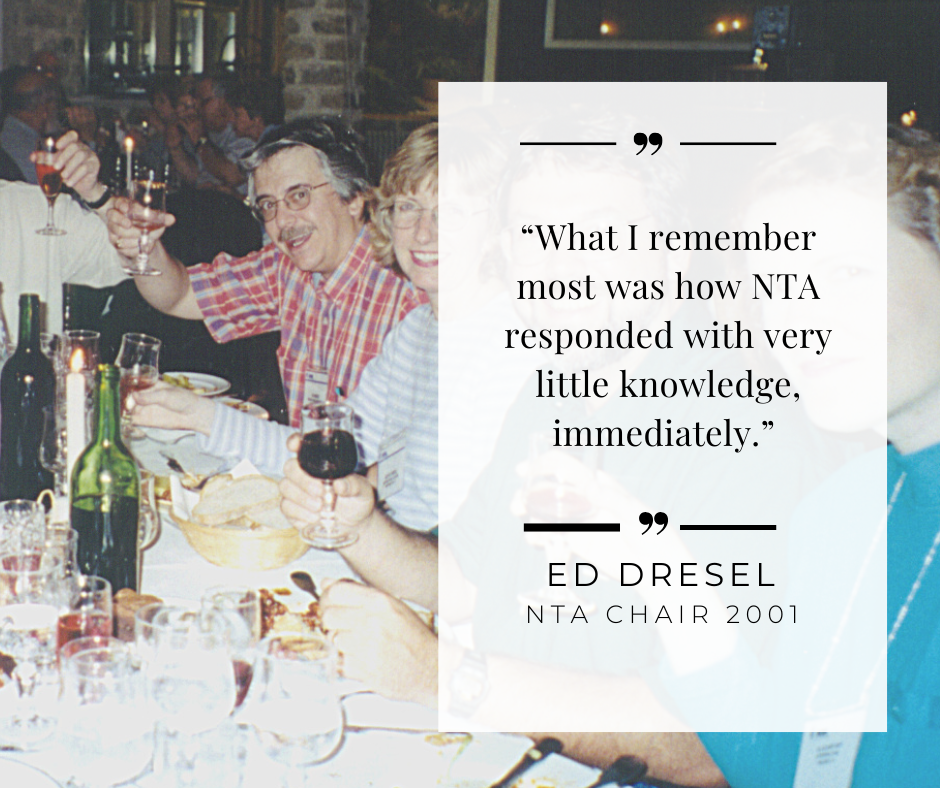
Edward Dresel, who served as NTA chair in 2001, believes that ability to adapt comes from something fundamental about the business of travel.
“The travel industry is the first to adapt because we are moving people, not products,” Dresel said. “Travel always comes back.”
Perhaps that’s the lasting connection between travel after Sept. 11 and travel after COVID-19. Neither crisis provided the industry with a roadmap for what came next.
The industry had to draw its own.
And 25 years after one of the most consequential days in the history of modern travel, the experiences of those who navigated both periods offer a reminder: The next disruption may look nothing like the last one, but the ability to adapt remains one of travel’s most valuable assets.