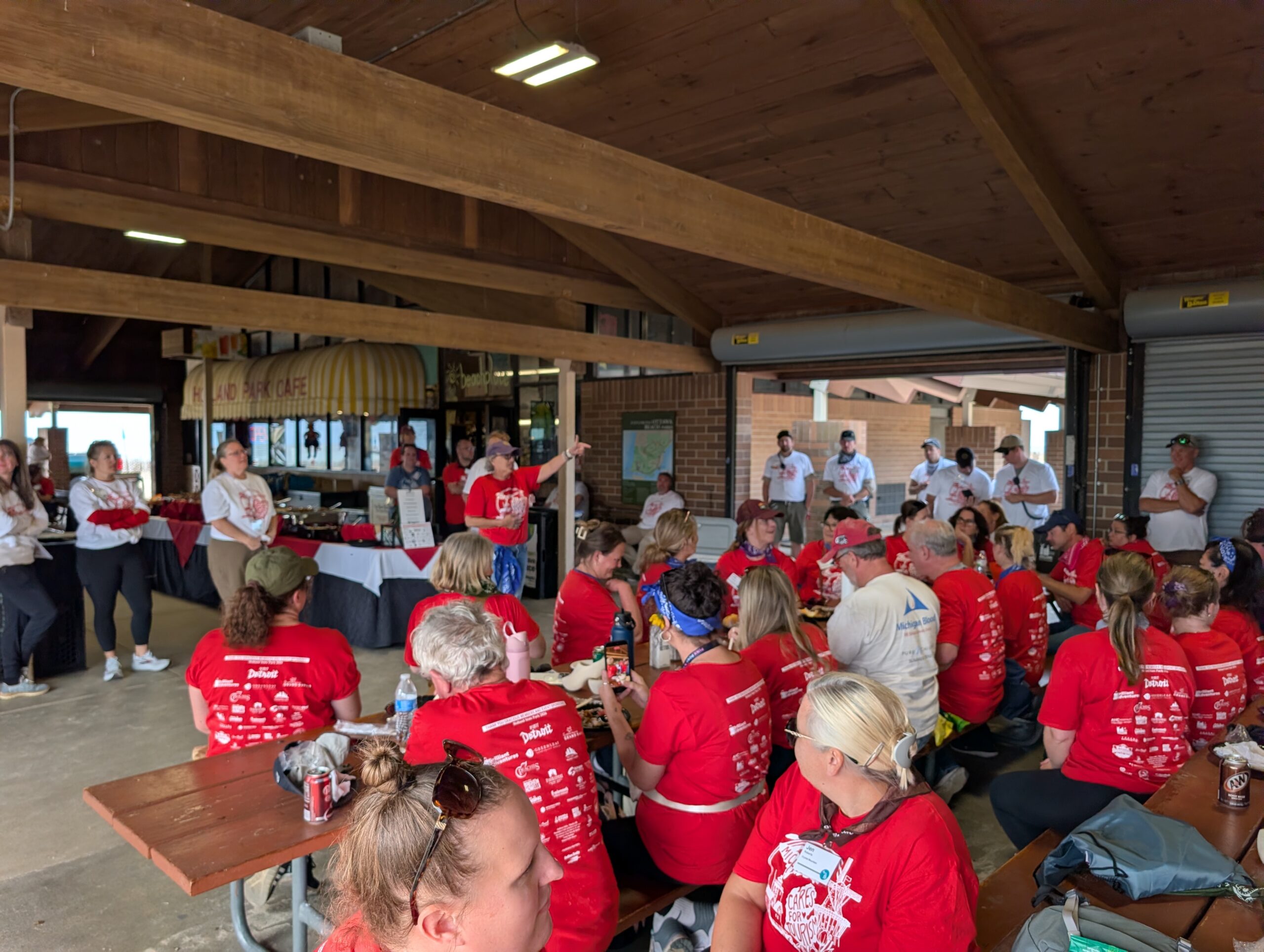

Michigan Cares for Tourism brings the industry together to give back, get to work, and build connections along the way.
There are plenty of ways to network in the travel industry. You can exchange business cards across a trade show booth, sit together at a luncheon, or strike up a conversation between appointments.
Or you can grab a pair of work gloves and get to know each other while volunteering side by side.
That was the scene in Holland, Michigan, as tourism professionals from across the state came together for Michigan Cares for Tourism, trading their usual workday of promoting destinations and welcoming visitors for a day spent giving back to one of the places that makes Michigan worth visiting.
For Patty Janes, founder of Michigan Cares for Tourism and a professor of hospitality and tourism management at Grand Valley State University, that combination of service and connection is exactly the point.
“Michigan Cares for Tourism is a volunteer partnership with the entire tourism industry, where we come together to volunteer and help restore our historic, natural, and cultural attractions in the state,” Janes said.
From a national idea to a Michigan tradition
Michigan Cares for Tourism may be uniquely Michigan, but its roots stretch into a broader travel industry tradition of giving back.
Janes served on NTA’s National Tourism Foundation board and later became a founding member of Tourism Cares, when NTA’s and USTOA’s foundations merged. Tourism Cares is the official nonprofit of NTA, giving Janes’ story a connection to the association that goes back years.
Through Tourism Cares, Janes saw firsthand what could happen when tourism professionals came together not simply to talk about making a difference, but to get to work.
“I had this magical experience with Tourism Cares events,” Janes said.
Michigan also had a need of its own. Janes said the Michigan Department of Natural Resources managed 260 historic attractions that, at the time, faced a combined $400 million maintenance deficit.
Janes approached Tourism Cares about replicating the volunteer model in Michigan, and Michigan Cares for Tourism launched in 2011 with partners from across the state’s tourism industry.
But Janes soon realized the program could accomplish something beyond restoring attractions. The people volunteering together were building relationships that could benefit Michigan tourism throughout the year.
“We knew we were investing in the asset, right? Making the attraction better, visitors would have a better experience the next day because we were here,” Janes said. “The benefits were truly endless.”
An NTA member rolls up his sleeves
That combination of service and relationship-building is something NTA member Matt Helmus of Windmill Island Gardens in Holland has experienced firsthand.
“You’re doing both things,” Helmus said. “You’re helping out sites around the state revamp, revitalize, get fixed up. But you also get to meet a lot of good people who work at different places.”
Those connections can lead to business opportunities, professional relationships, and a better understanding of destinations throughout Michigan. And the physical work fills an important need.
“There are a lot of places in tourism owned by governments, nonprofits that don’t have a lot of money,” Helmus said. “Michigan Cares really helps them to stay up with what they need to.”
One industry, one big volunteer crew
Kelly Wolgamott, vice president of Pure Michigan, described Michigan Cares for Tourism as a unification of the industry — an opportunity for tourism professionals to “roll up our sleeves” together.
“It really is an incredible time for the industry to come together and to give back,” Wolgamott said.
The experience also brings together people who might otherwise never cross paths. Executives and owners work alongside managers, students, entry-level professionals, and longtime tourism veterans.
“You get to meet so many people, too, in the industry that you probably wouldn’t ever get the opportunity to meet,” Wolgamott said.
Her advice to someone considering participating for the first time is simple: Do it.
“By the end of tomorrow, you will meet people you’ve never known before, and you’ll have lifelong friendships,” she said.
Holland beyond the tulips
This year’s gathering also gave participants an opportunity to experience Holland—a destination many travelers immediately associate with tulips.
But Linda Hart, executive director of the Holland Area Convention & Visitors Bureau, wants groups to discover what happens during the other 51 weeks of the year.
Holland’s Dutch heritage, Lake Michigan location, floral displays, and group-friendly attractions give visitors plenty of reasons to explore beyond its famous Tulip Time festival.
There are surprises, too. Downtown Holland has heated streets and sidewalks, with a municipally owned snowmelt system helping keep downtown snow-free and allowing the community to host events throughout the year.
The destination also offers group experiences such as Holland Bowl Mill, where visitors can learn how traditional hardwood bowls are made.
Those discoveries point to another benefit of Michigan Cares for Tourism: Participants aren’t simply learning about each other. They’re learning about each other’s destinations.
The more tourism professionals know about communities beyond their own, the better equipped they are to recommend another stop, attraction, or experience to a visitor.
“This is literally this industry”
Hart has participated in Michigan Cares for Tourism over the years and has watched the program evolve. For her, its impact extends well beyond whatever project happens to be on the day’s work list.
“You’re working next to somebody I don’t even know,” Hart said. “By the end of the day, I’m going to know you.”
Introductions are made. Teams are formed. Work begins. Somewhere along the way, conversations happen, connections form, and the strangers you started the day beside aren’t quite strangers anymore.
“This is literally this industry,” Hart said. “How kind and thoughtful and caring people are.”
The projects matter. The historic, cultural, and natural attractions that are better because volunteers showed up matter.
But so do the relationships built while the work is getting done.
That spirit of giving back also reflects NTA’s commitment to meaningful travel. Through its Meaningful Travel Guide, NTA encourages tourism professionals to put people, places, and the planet at the center of travel, offering practical ideas and inspiration for making a positive impact on the communities they serve.
Janes knew from the beginning that the program could make tourism attractions better. What she didn’t fully anticipate was how much it could strengthen the people and communities around them, too.
The tourism industry spends every day inviting people to experience Michigan.
For one day, it shows up to take care of it.